
Outing to Cape Point National Reserve.
20 June 2026.
Leader John Graham.
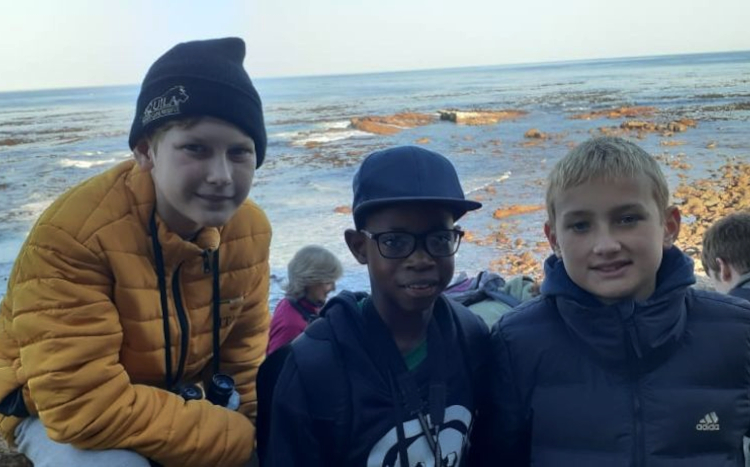
Some seventy or so birders turned out for the seabirding stint at Cape of Good Hope on a lovely sunny morning with a light and warm North-east wind and a small, easy swell. The weather was, in fact, a little too good and seabirds were relatively few and unfortunately quite far offshore.
A good movement of Sooty Shearwaters with interspersed White-chinned Petrels early on was somewhat beyond easy binocular viewing and made even tougher by low-lying smog offshore that made focus and detail fuzzy, even with scopes. Both species were seen a little better later, as the smog cleared somewhat and the conditions became a little crisper.
Individual Subantarctic (Brown) Skuas and both Northern and Southern Giant Petrels were seen closer to the shore at times and allowed slightly better views. Of the reasonably identifiable Giant Petrels, the majority were Northerns, although two birds appeared to be reasonable calls for Southern.
Two single Shy Albatrosses were picked up quite late in the morning far offshore and were very difficult to get onto, even with scopes. Gannets were present in good numbers, with a good sprinkling of brown immature birds, and Cape Cormorants, Greater Crested (Swift) Terns and Kelp Gulls were common in the inshore waters. Crowned and White-breasted (Great) Cormorants were also present on the offshore rocks near the carpark, together with numerous, lolling Cape Fur Seals.
With the seabirding being blighted by the great weather, the highlight for many was the sparring serpents a short distance from the carpark, two large male Puffadders that wrestled for a half hour plus at the road’s edge, totally absorbed in their contest and oblivious to their captivated audience. Eventually they were deftly and skilfully removed by Dennis Laidler to safer positions distant from the road, due to fear that they might stray onto the road and be flattened – this after seeking and receiving approval from TMNP rangers.
Many thanks to all who shared in the seabirding, and for your good-natured acceptance of the rather poorer than normal showing of the sought-after tubenoses. Thanks also to Cliff Dorse for assisting significantly with the guiding duties.
The following reports were written by two young birders who have joined the Cape Bird Club in the last four months;
The trip to Cape Point was so cool. I got six new lifers, which included Northern Giant Petrel, Shy Albatross, Cape Gannet and a really cool bird I wasn’t expecting to see: (wild) ostrich. We also saw a Cape Bunting and lots of fynbos specials, including Orange-breasted Sunbird and Cape Sugarbird.
There were also a few uncanny moments, like when I lost my bag and we had to catch up with the people who had it. All in all, it was a fun trip and I’ll definitely be back there.
P.S. Good birding (on a seawatch) or good weather … Take your pick!
Harvey, 9 years.
We set off early that morning with excitement filling the air; my first land-based seabird watch! When we arrived at Cape Point Nature Reserve, the sun had just risen above the sea and the world was bathed in a golden light. A beautiful Cape Sugarbird darted in and out of a protea bush, so we stopped the car and took some nice photos. Then, a zip of orange – an Orange-breasted Sunbird!
We drove along to the Cape of Good Hope where we were meeting. We arrived there ten minutes early and sat down on a towel, because the rocks were cold. The sea watch started with a flock of Sooty Shearwaters quite far out. People shared their knowledge, experience, and scopes. The birds were quite far out, so scopes were very useful.
Both species of Giant Petrel were present, with a Northern Giant flying very close to the cliff towards the end. A few people even spotted a Shy Albatross in the distance. John Graham did a really good job leading and shared very useful information. It was a great outing. Definitely coming again next year!
Jack, 12 years.
Also seen after the seawatch … Ground Woodpecker, in the parking lot at the lighthouse.
Thank you to John Graham for leading the seawatch so ably, and to Cliff Dorse for his help. Thanks, also, to John, Jack and Harvey for their reports and to all who contributed photographs.
Photographs by Penny Dichmont, Tanner Cappell, Allen Leslie, Daniel Viljoen and Stephen Judge.
Report by Penny Dichmont.


